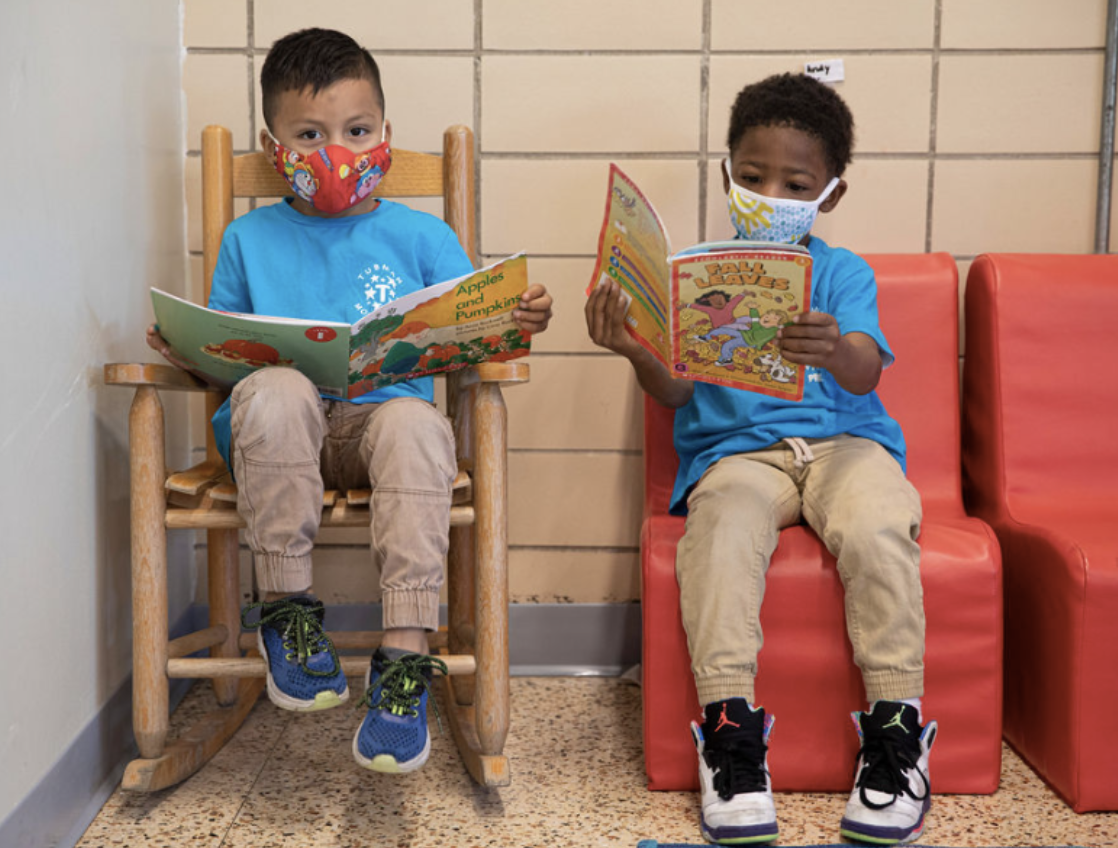
 Teaching students to read is not easy, and the research has shown that for decades teachers throughout the country have been using methods that were not grounded in the science of reading. As a result, many students struggled to learn to read. The “science of reading” refers to a set of teaching practices that have been proven by a large body of research to effectively teach children how to read. According to the science of reading, in order to become readers, students must be taught phonics in a systematic and explicit fashion.
“At the beginning of my teaching career and even in the founding of Crescent City Schools, there was one particular theory of how kids learn how to read, which was by exposure to great literature,” Chief Instructional Officer Cynthia Costello said. “And we now know that that is not true, and we’ve had to make some pretty serious and significant shifts in terms of how we teach students how to read.”
Prior to the emphasis on phonics, an ELA teacher would have focused on teaching students to identify words through context clues, pictures, and sentence structure. Now that teachers are more focused on teaching students phonics, their time and efforts are spent on exercises that increase students’ phonemic awareness (that spoken words are made up of individual sounds) as well as their understanding of the alphabetic principle (linking together sounds and letters).
CCS began this curriculum transition in the 2019-2020 school year, but when schools closed in Spring 2020 due to the COVID-19 pandemic, it was difficult to implement the new curriculum model fully. Now that schools are back in person full-time, staff are able to implement English Language Arts instruction that is completely aligned to the science of reading.
The current state and national ELA standards are grounded in the science of reading, and they outline that students should learn how to read in the early grades (K-2) so that they can focus solely on reading comprehension in the upper grades (3+).
“What we like to say is that in grades kindergarten through second, you’re learning how to read, and then at the end of second grade, you begin reading to learn,” Costello stated.
A student’s reading progress is measured by their fluency, meaning how accurately and how quickly a student can read a given text. If students have not mastered learning the phonics code by the time they enter third grade, they won’t read fluently enough to comprehend the text. It will then be hard for them to stay on grade level because they are still learning how to read as opposed to learning content through reading.
Although the method and approach CCS utilizes to teach students to read has shifted, an emphasis on ongoing professional development for staff members in the network remains the same. During summer professional development sessions held on each CCS campus, all ELA staff members received education on the science of reading and how to implement specific phonics programs, directly from curriculum providers. Additional training was provided to K-3 ELA teachers. These staff members continue to receive monthly training with the Associated Professional Educators of Louisiana (A+PEL).
Since transitioning to this new instructional method and focus on phonics, the teachers at CCS are now better able to pinpoint specific issues a student is having on their literacy journey, and they are also better-equipped to provide targeted remediation and instruction to help close those gaps.
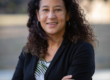
Andrea Villagomez is a first grade teacher at Akili Academy. She has focused this year on activities that enable her students to master ”learning the (phonics) code” and has seen tremendous growth as a result. From the beginning of the school year through December, Villagomez decreased the percentage of students in her class in need of intensive intervention by 15 percent, while increasing the percentage of her students who are reading on or above grade level by 11 percent. These improvements represent the largest behind-in-reading gap closure in the school.
“Learning the (phonics) code is certainly a different approach from how I learned to read,” shared Villagomez. “But I’ve seen the difference it makes, both for my students in gaining new skills, and for myself, in learning to identify where they need support. I’m excited to see how much my students grow by the end of the academic year.”